Luna and Sabre’s Journey
Our own dogs are a huge part of why Good Owners exists.
They are not polished “demo dogs” or naturally easy dogs. They are real dogs with real histories, real emotions, and real challenges.
A lot of our methods were shaped by the work we had to do when they came back to us after a difficult foster period.
What we teach now was built through living it.
Luna
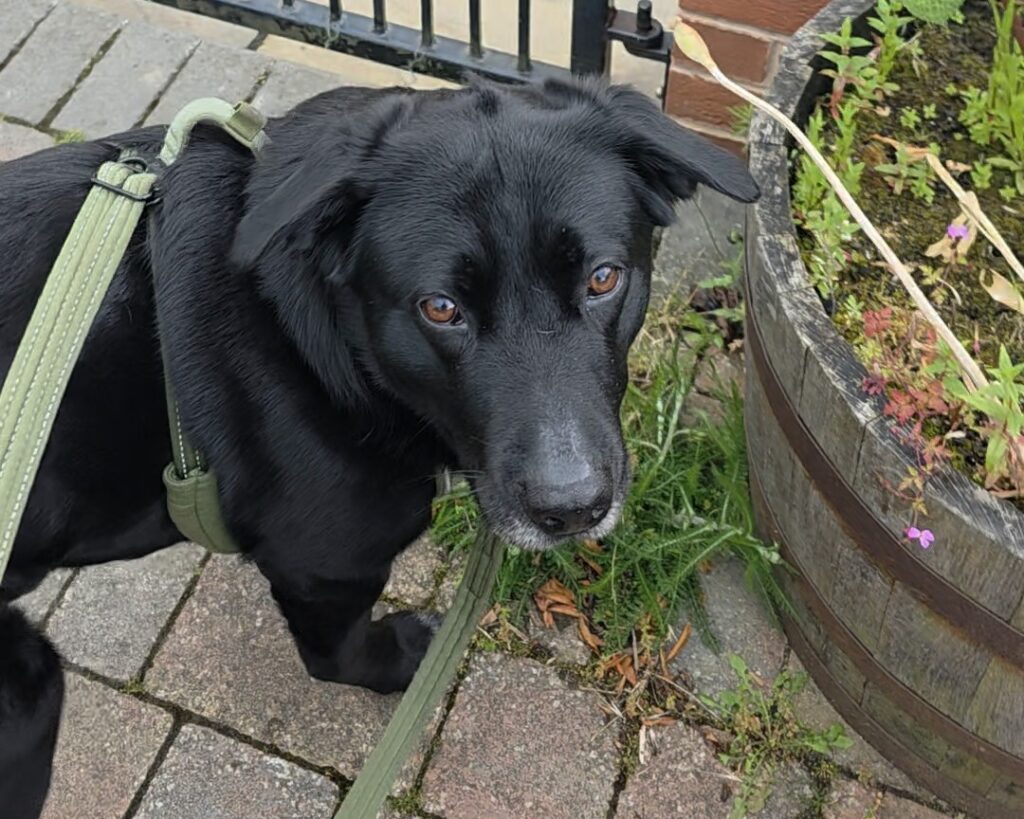
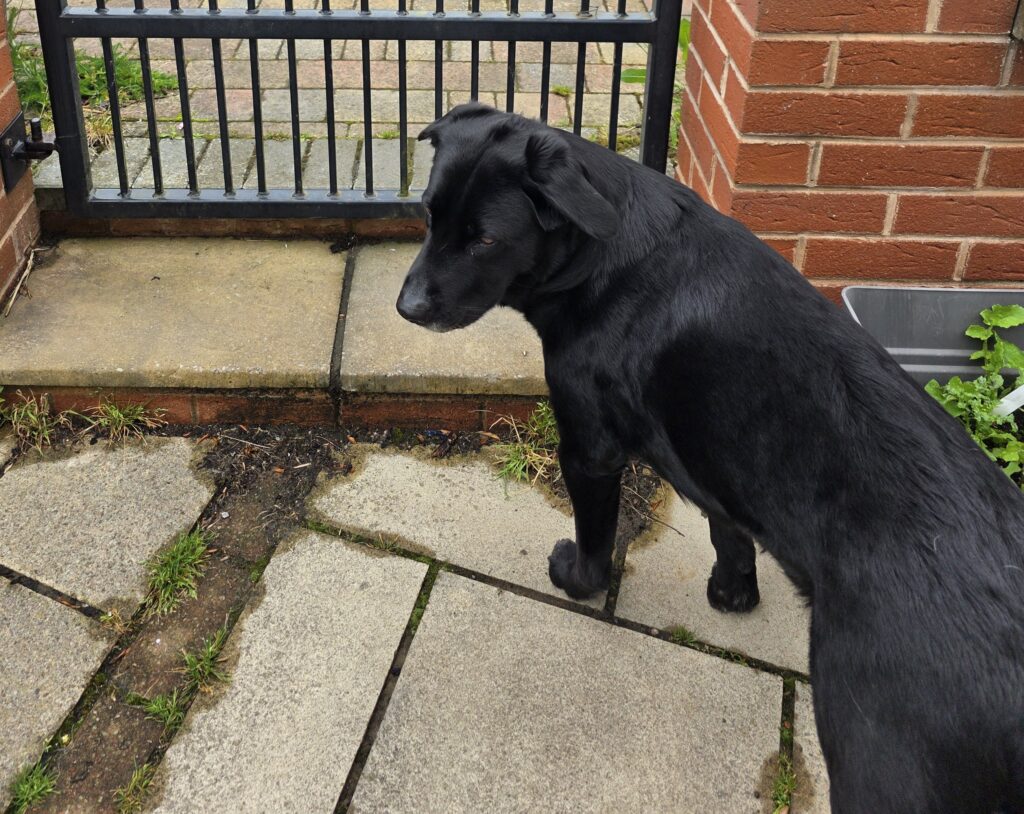
When Luna came back to us from foster care, she was carrying far more stress than we first realised.
During her foster period, Luna became involved in several fights with another foster dog. By the time I took over her care full time, she was carrying far more stress than we first realised.
Luna is now highly reactive around other dogs, particularly when they feel too close, too fast, or unpredictable. On top of that, she naturally took on the role of what we call the house boundary patrol sergeant — always watching, assessing, and feeling responsible for what happens around her home.
For Luna, reactivity isn’t about disobedience.
It’s about fear, stress, and feeling like she has to manage her environment.
Our work with her has focused on:
— allowing people and dogs to pass without reacting
— calmer, more neutral boundary surveys
— reducing the need to constantly patrol
— improving recovery after seeing triggers
— building confidence around dogs through distance work
— desensitisation in private fields
— pattern games and predictable routines
— learning that the world can move around her without needing a response
Luna has taught us that progress often looks small from the outside.
A pause. A softer body. A quicker recovery. A glance back instead of a bark.
Those small moments matter.
Sabre
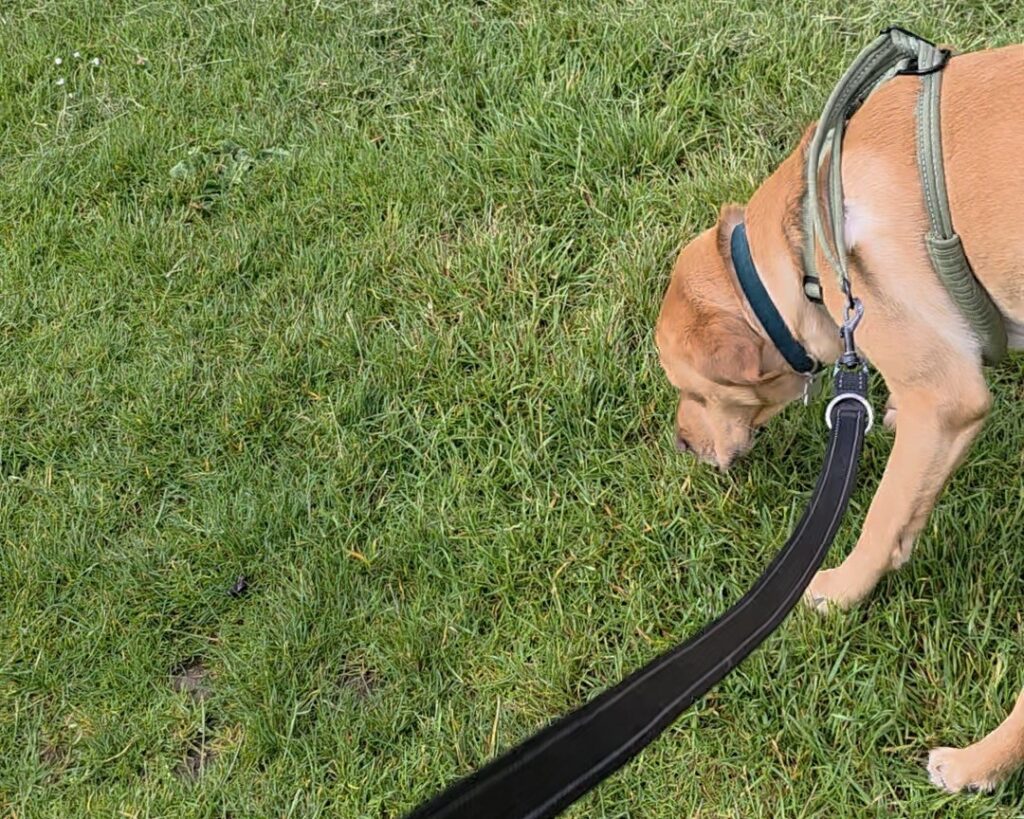
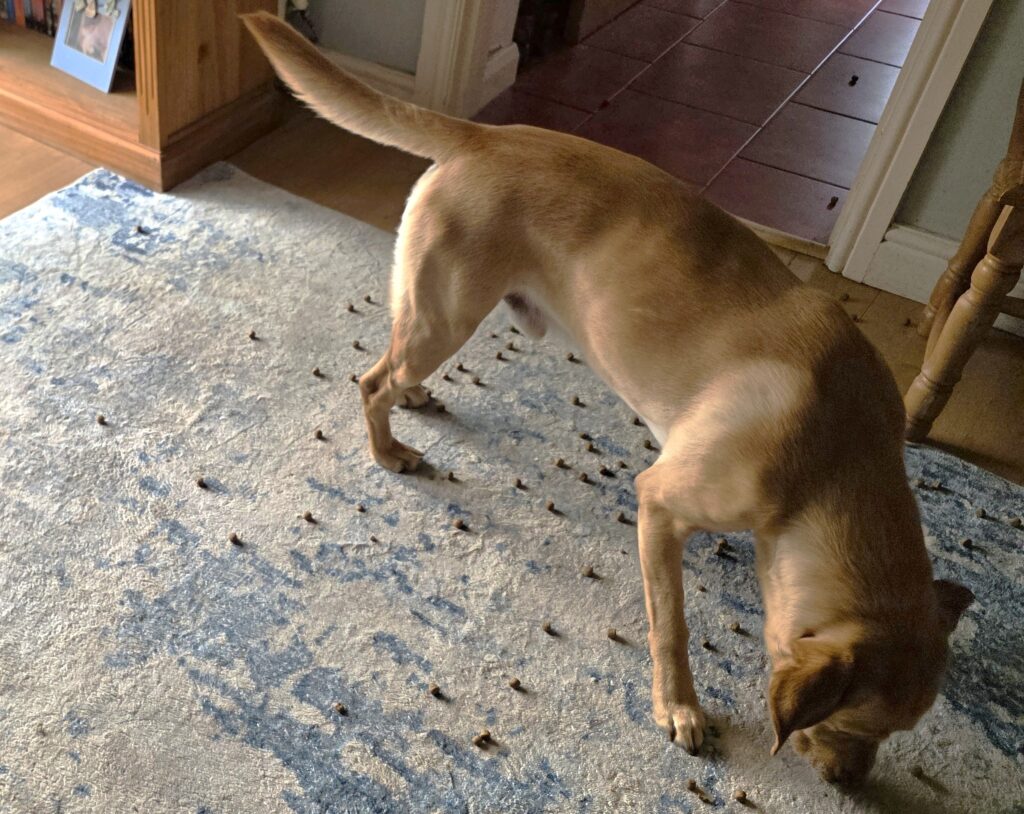
When Sabre came back to us from foster care, he was the complete opposite.
Where Luna came back carrying fear, Sabre came back carrying pure over-arousal.
Everything was exciting. Everything was urgent. Everything was full speed.
We nicknamed him the kangaroo almost immediately.
He could jump high enough to reach head height with Andrea’s dad, who is 6’4”, and often did.
His biggest struggle wasn’t fear.
It was regulation.
Like many trainers, we naturally reached for food. But for Sabre, food didn’t calm him—it added even more excitement. The harder we trained, the more aroused he became, until he eventually stopped taking food altogether. Training sessions often pushed him higher and higher until he became so overstimulated that he stopped taking food altogether.
Sabre taught us that hyperactivity isn’t always about “bad behaviour”.
Sometimes it’s a nervous system that simply struggles to slow down.
Our work with him has focused on:
— reducing arousal around food
— building calmer waiting behaviours
— interrupting jumping without punishment
— creating structure around exciting moments
— teaching pause and reset patterns
— allowing safe outlets for his energy
— building engagement without pressure
Sabre has taught us that energy itself is not the problem.
It just needs somewhere safe to go.
What They Taught Us
Although Luna and Sabre struggle in very different ways, they both helped shape one of the biggest parts of our training method:
small, repeatable sessions.
Hyperactive and reactive dogs often find it difficult to stay in an emotional state where learning is easy. By teaching emotional flexibility, we help dogs recover more easily from life’s inevitable moments of excitement, fear and frustration, so learning doesn’t stop when emotions change.
So we work differently.
A few repetitions.
A success.
A break.
Then try again later.
This little and often approach allows dogs to practise skills while staying in a state where they can actually learn.
For Luna, that means shorter, lower-pressure exposure around triggers.
For Sabre, it means shorter bursts before excitement takes over.
That principle now sits at the centre of how we work.
Because progress isn’t about how much you do in one session.
It’s about how often you create success.
Why Their Stories Matter
Luna and Sabre are still works in progress.
They still have difficult days. They still struggle. They still teach us.
That matters.
Because everything we teach through Good Owners has been shaped not just through qualifications and research, but through real life with two very different dogs who needed patience, understanding, and adaptation.
They helped build the calm-first method.
And they continue to shape it every day.
Learning begins with calm.
Could Your Dog Benefit Too?
Every dog has their own journey. Luna and Sabre are still on theirs, and we’d be honoured to help you begin yours.
Whether your dog is struggling with reactivity, excitement, pulling on the lead, jumping up, barking, fear, frustration, or simply finding everyday life overwhelming, our approach focuses on understanding why the behaviour is happening before deciding how to help.
At Good Owners, we believe training should build confidence, strengthen the relationship between you and your dog, and create lasting change through calm, practical, force-free methods.
If Luna and Sabre’s stories feel familiar, you’re not alone—and you don’t have to work through it on your own.
We’d Love to Help
Whether you’re looking for a one-to-one assessment, ongoing training, group classes, or simply want to discuss whether we’re the right fit, we’d be happy to hear from you.
📧 Email: hello@goodownersdogtraining.co.uk
🌐 Website: www.goodownersdogtraining.co.uk
📞 Telephone: 07719795360